Moving day and arrival
How to document damaged or missing belongings after a move

A damaged table leg or missing carton can be difficult to investigate if the first record is made weeks later. Start when you notice the problem. Describe the item, connect it to the shipment record, photograph the condition, and tell the responsible mover through its official channel. Good documentation is plain and specific. It separates what you observed from what you think may have happened.
The right next step depends on who handled the move. Interstate household-goods movers have federal procedures; local moves may follow different state rules and contract terms. A self-managed rental move may involve a rental agreement, separate insurance, or no carrier claim at all. Identify the applicable agreement before relying on a deadline or form described in a general guide. The evidence habits here help in each setting, even though the claims process differs.
Start a single discrepancy record
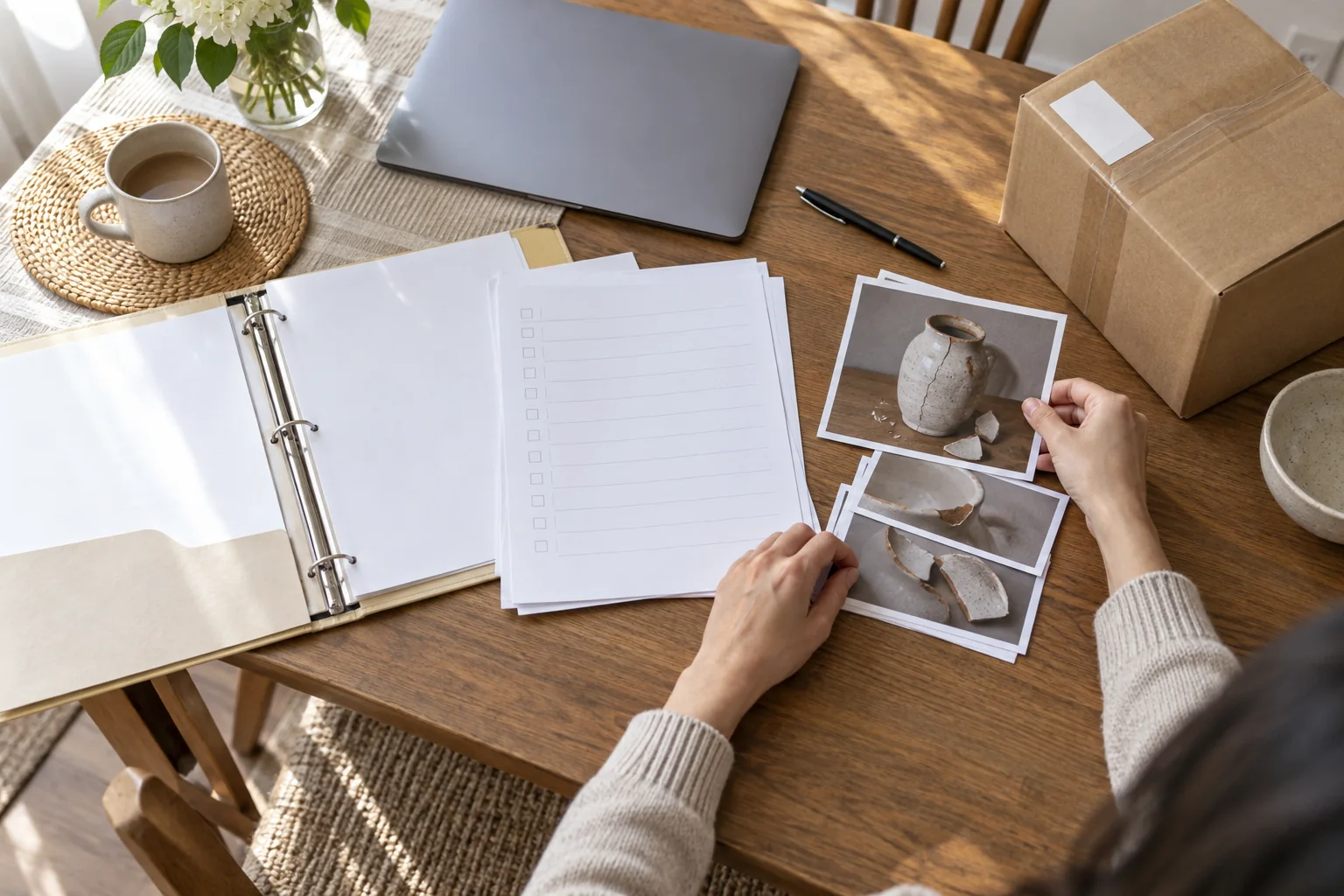
Use one folder, notebook, or digital document for every open issue. At the top, record the moving date, pickup and delivery addresses, mover's name, shipment or order number, and the names of the people who received the goods. Add the date and time each problem was first noticed. A dated record is useful even if you do not yet know whether the mover is responsible.
Make one entry per item or carton. Include the inventory number when one exists, the room label, a recognizable description, and the exact issue. “Blue ceramic lamp, shade cracked on one side” is more useful than “lamp broken.” “Box marked kitchen 14 was on pickup inventory but not received at delivery” is more useful than “some kitchen things missing.” If you are uncertain whether an item was packed at all, say so and check your own photos or list before making a firm claim.
Avoid combining several unrelated problems into a single paragraph. Separate entries make it possible to attach the correct photos, purchase evidence, and communication history to each item. They also help you close one issue without losing track of another. If a carton later appears in a different room, update the record with the date and location instead of quietly deleting the earlier note.
Preserve the delivery paperwork
Locate the estimate, order for service, bill of lading if used, pickup inventory, delivery inventory, and any signed exception notes. Save copies together. If you received paper forms, photograph or scan every page, including the page with signatures and any handwritten comments. Keep the originals in a safe place. Do not assume the mover will supply a copy months later when you need it.
The pickup inventory can show that an item was accepted and what condition was recorded. The delivery inventory can show whether it was marked received or noted missing or damaged. Read the wording carefully. An inventory may list a whole piece of furniture while a small accessory was packed separately. Match the problem to the best available description; do not invent an inventory number for a component that never had one.
If the receiving person noted damage on a delivery form, keep that form with the later photographs. If nothing was noted at delivery because the damage was hidden inside an intact box, record when the box was first opened and who was present. Do not claim that the crew saw damage they could not have seen. The distinction between visible and concealed damage matters to an accurate account.
Photograph the item and its surroundings
Take a wide photo that identifies the entire item, then closer images of the affected area. Include a side view if it shows depth, warping, or a broken joint. For a missing piece, photograph the related item and any empty hardware bag or packaging. For a broken item inside a carton, photograph the box label, exterior condition, packing arrangement, and item before the contents are rearranged. Use good light and avoid filters that change color or contrast.
Photographs should answer simple questions. Which item is this? Where is the problem? What was its condition when you discovered it? A close-up of a scratch without a view of the table can be hard to match to an inventory entry. A wide shot alone may hide the scratch. Keep both. If a ruler or familiar object helps show scale, include one without covering the damage.
Retain original image files where possible. You may make annotated copies to point out a detail, but preserve the unedited version. Record the date taken and a short caption in the discrepancy log. Avoid taking dozens of nearly identical photos with no labels. A small, clear set for each item is easier for both you and the provider to review.
Keep the item and packaging when practical
Set aside the damaged item in a place where it will not be repaired, used, or discarded before you understand the claim process. Keep relevant packaging, padding, and the carton if they may help show how it was packed and transported. Photograph the layers before separating them. A crushed corner, wet box, or missing protective wrap may be important context.
Practical limits apply. A large broken piece of furniture may block an exit or create a hazard. If it cannot remain where it is, photograph it thoroughly, note why it was moved, and store it safely if possible. Do not keep unsafe debris in a household solely for documentation. Contact the mover or insurer promptly to ask whether an inspection is needed before disposal or repair.
If an item must be repaired for immediate use, document its condition before any work begins. Save written repair estimates, invoices, and correspondence. Make sure a repair professional describes what they found rather than asking them to confirm a cause they cannot know. The record should show the condition and cost of work, not a manufactured explanation of when damage occurred.
Check whether a missing item is truly missing
Before reporting a carton as lost, compare pickup and delivery records. Search rooms where similar boxes were placed, closets, garages, storage areas, and the vehicle used for personal bags. Ask household members whether they moved the item after delivery. A mislabeled box may have been put in a different room. Write down where you looked; the search itself may reveal a useful clue.
For a missing item inside a delivered carton, distinguish that from an entire missing carton. Note whether the box appeared open or damaged, whether the packing was done by the household or the mover, and when the contents were checked. Do not assert theft or a specific cause without evidence. Describe the absence and the records that support what should have been inside.
If delivery occurred in stages, ask the mover whether the item is on a later vehicle or in storage. Request the answer in writing, with a shipment or inventory reference and expected next step. A verbal “we will find it” may be sincere but is hard to track. Keep the item listed as unresolved until it physically arrives or the provider gives a documented resolution.
Build a value record without guessing
Gather receipts, order confirmations, photos taken before the move, serial numbers, model names, or other records that identify the item. For furniture or appliances, note age and condition before the move if you have reliable evidence. A receipt for a current replacement may show today's price, but it does not by itself prove the value of the specific used item that moved. Keep the distinction clear.
If you do not have a receipt, say so. Search old email, account purchase history, or payment records before estimating. A repair estimate can help describe the work needed on a damaged item; it may not establish replacement value. Ask the mover what documentation its claim process requires. Provide what you actually have rather than creating a precise number with no basis.
Some coverage arrangements have different valuation methods and limits. Read the valuation or insurance choice in your agreement. Do not assume that the word “insured” means full replacement cost. If you bought separate insurance, check that policy and its claims instructions too. A general moving article cannot determine the amount owed in an individual case.
Compare with pre-move condition carefully
A photograph from before the move can help show that an item was intact, but only if you can identify the same item and the relevant area. Look for images from an inventory walk-through, room photos, a sale listing, or ordinary household pictures. Preserve the original context and date information when possible. Do not crop away a preexisting mark that might change the interpretation. The goal is a fair comparison, not the strongest-looking image in isolation.
Read the mover's condition codes or notes if the pickup inventory used them. Ask for an explanation of any abbreviation you do not understand. A condition note may describe an old scratch on one side of a table while the new problem is a broken leg. State that distinction explicitly. If you disagreed with a pickup notation and recorded the disagreement, include that record. If you did not, avoid rewriting the pickup history after the fact; describe what you can verify now.
Household photos may not show every surface. The absence of a pre-move image does not mean you should abandon the entry. It means the evidence set is narrower. Use the pickup inventory, delivery notation, packaging, current photos, and any reliable witness observations. Identify which facts are documented and which are based on recollection. That makes your account easier to trust and easier to update if another record appears.
Treat damage to the home as its own issue
A gouge in a new home's floor or a cracked door frame is different from damage to a shipped item. Photograph the entire area and a close view of the mark. Note the room, the delivery route, and when the problem was first seen. If a building manager or landlord needs notice, follow the property rules promptly. Keep that communication separate from the shipment inventory so the two issues do not blur together.
Before attributing the mark to the moving crew, check whether it appeared in a pre-move walk-through photo or condition report. The household may have a move-in inspection requirement under its lease or building rules; use that process as written. If the mark was noticed while the crew was present, point it out and ask how the company documents property damage. If it was found later, say so. Do not state that someone saw the event unless they did.
Safety and access come first. If a damaged threshold, railing, or appliance creates a hazard, make the area safe and contact the appropriate property or service professional. Document the condition before repair when practical, but do not leave a dangerous route open solely to preserve evidence. Save repair estimates, invoices, and any written explanation of the work needed.
Notify the provider in writing
Use the email address, portal, or claim method identified in the moving agreement. State the shipment number, delivery date, item descriptions, and that you are reporting loss or damage. Attach the initial evidence or say when it will follow. Keep the message factual and concise. Ask for the claim form, submission instructions, and confirmation that the notice was received.
A phone call can help clarify the process, but make a written record afterward. Note the date, representative's name, and what they said. Send a short follow-up through the provider's official channel if a deadline or promised inspection was discussed. Do not send the only copy of an original receipt or document unless the process expressly requires it and you retain a copy.
For interstate moves, FMCSA's loss and damage guidance says to contact the mover promptly, list missing and damaged items, take photographs, and submit supporting documentation with a claim. It states that a claim must be filed within nine months of delivery for that federal process. Confirm the applicable rule for your shipment; local and self-managed moves may differ. Do not wait for the end of the period if you can document the issue now.
Separate notification from a complete claim
An initial message may tell the mover about the problem without satisfying every requirement of a formal claim. Read the provider's instructions and the applicable agreement. Track what was submitted, when, through which channel, and any confirmation number. If the provider asks for a particular form, complete it accurately and attach the evidence that supports each item.
Do not treat an automated acknowledgment as proof that every attachment arrived or that every item was included. Review the submitted copy. If a portal has size limits, make sure the photographs actually uploaded. Save a PDF or screenshot of the submission if available. When sending email, keep the sent message and attachments in the same folder as the discrepancy log.
If new damage is found during unpacking, add a new entry and notify the provider according to its process. Mark the date discovered; do not silently change an older submission so it appears the problem was reported earlier. Accurate chronology helps everyone understand which facts were known at each stage.
Track responses and unresolved questions
Create a short timeline: first observation, notice sent, claim submitted, acknowledgment, inspection, requested documents, proposed resolution, and your response. Record names and dates. If the mover says another department will call, note the expected date and follow up if it passes. Keep copies of offers and explanations in writing.
Ask direct questions when a response is unclear. Which items are covered by the proposed resolution? Is the amount for repair, replacement, or another method? Does accepting it close all items or only one? Do not assume a phone conversation changes the written terms. If you need time to compare an offer with your records, say so and check the applicable response deadline.
FMCSA explains that it does not decide or force payment on individual loss and damage claims. That is a reason to keep the evidence and correspondence organized, not a reason to make unsupported accusations. If you need help interpreting rights under a particular contract or state law, seek qualified local advice. The household's immediate task is to maintain a reliable record and follow the required process.
Keep a practical unpacking trail
As boxes are opened, write down the carton label and the contents relevant to a discrepancy. Do not mix protective paper from several fragile boxes until you have checked what each held. If a fragile item is broken, photograph it in place before cleaning up. Then make the area safe. If a needed appliance or work tool is missing, note the effect on the household separately from the evidence that it was in the shipment.
The guide to unpacking in an order that makes the home usable can help you work through rooms without losing track of contents. The guide to handling boxes and packing materials after a move can help once you have set aside any packaging connected to open issues. Do not recycle a carton simply because the room is crowded if its label or damage may be relevant.
A household can keep two lists: items needed for daily life and items needing claim follow-up. That prevents a missing kitchen tool from vanishing in a general to-do list. Close each entry only when the item is found, repaired, replaced, or otherwise resolved through a documented decision.
Make the final record easy to understand
Before submitting a full claim or responding to a proposed resolution, read the file as someone new to the move would. Each item should have a description, inventory reference if any, observed problem, discovery date, photographs, value or repair evidence if available, and communication history. Remove guesses presented as facts. If something remains uncertain, say what you checked and what you still need to know.
Keep the tone neutral. “The cabinet arrived with a cracked door; attached are the delivery notation and photos” is clearer than a long theory about who caused it. Evidence may support a conclusion later, but the first record should remain accurate even if the cause is disputed. A concise, item-by-item account gives the provider a workable path to investigate and gives the household a reliable way to track the outcome.