Housing and access
How to prepare for a move during bad weather
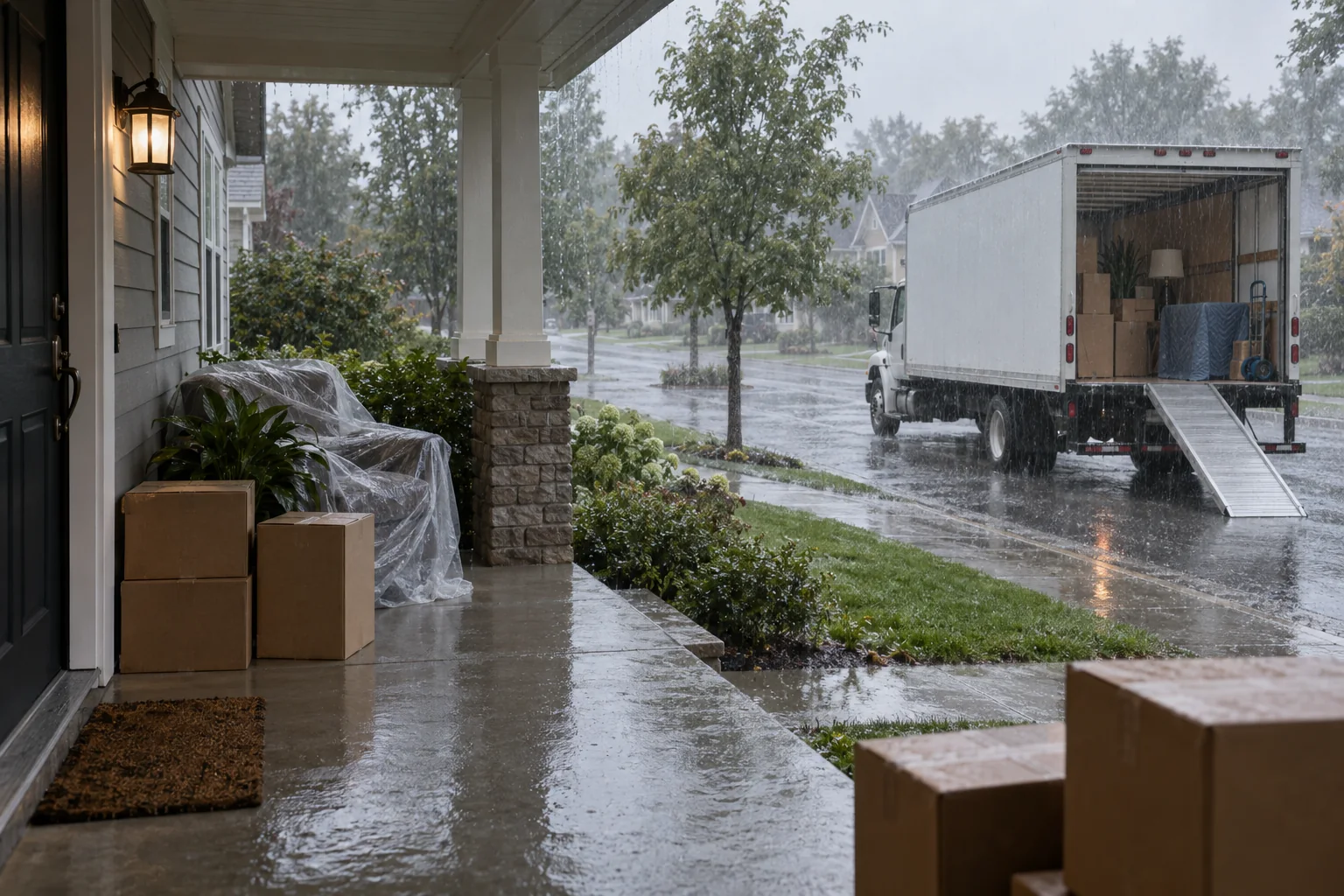
Weather can change the route, loading area, walking surfaces, and timing of a household move. A light shower and a dangerous storm do not call for the same response. The first decision is whether the move should proceed at all under the conditions expected. Make that decision with current forecasts, official alerts, building access information, and the moving provider's safety judgment, not with a calendar deadline alone.
Prepare a flexible schedule before the forecast becomes urgent. Know whom to contact at the mover, old property, new property, storage facility, and temporary lodging. Ask how reservations or delivery windows can change. Protect belongings appropriately if the move goes ahead, but do not treat wrapping as a reason to ignore unsafe roads or surfaces.
This article is about planning and communication. It does not teach lifting technique or override emergency instructions. For current US forecasts and alerts, use the National Weather Service and local official information. If a road is flooded, the National Weather Service says not to drive through it or around a barricade. A shipment can be rescheduled; a hazardous crossing should not be attempted to keep an appointment.
Decide when the weather changes the plan
Choose a point before move day to check the forecast and another on the morning of loading. The closer the move gets, the more specific the information becomes. Follow official watches, warnings, and local travel notices for the actual route, including the destination. Weather at the old home may differ from conditions at the storage site or new address.
Make a simple decision list: proceed as planned, adjust the time or route, pause while conditions change, or reschedule. Assign who will make that call with the moving provider. The choice should reflect the severity of the conditions and the provider's operations, not a fixed rule such as “all rain is fine” or “all snow cancels.”
Ask the mover about its weather policy and communication process before bad weather is certain. Who will contact whom? What happens to a reserved elevator slot if the truck is delayed? Is a new delivery date possible if the route closes? Get relevant terms in writing and keep the contact number available on move day.
Do not wait until workers are carrying furniture to discuss a worsening condition. If an official alert or site hazard changes the safety picture, stop, communicate, and revise. The person in charge of loading should know who can authorize a pause or change in the household plan.
Agree on decision points before conditions worsen
Write down what information will trigger another conversation with the mover. An official warning, a road closure, an inaccessible building entrance, or a forecast that changes the expected travel window are examples. The trigger is a prompt to reassess, not an automatic rule that every move must stop. The provider and household can then decide based on the actual site and route.
Set a time to make each decision. Check the forecast the day before, confirm the route on the morning of loading, and check again before the truck departs for a long trip. If the weather changes while the crew is working, pause long enough to share the new information. A plan that is only discussed at the start of the day may no longer fit by afternoon.
Record what happens to reservations if work stops halfway through. Can belongings remain safely in the old home? Will the truck be loaded but unable to travel? Who secures the property and contacts the new building? These questions have different answers depending on when the pause occurs. Asking them in advance makes the fallback more than a vague promise to “figure it out.”
Build a weather-sensitive timeline
Put the old-home departure date, new-home access time, elevator reservation, loading area booking, and delivery window on one page. Add alternate dates or contacts where they are available. A one-hour truck delay can affect a building slot, a key handoff, and temporary lodging.
Mark the appointments that can move and those that cannot. If the old property must be vacated by a certain time, ask the property contact what options exist if a severe weather event prevents safe loading. Do not assume an extension is available until it is confirmed. Make the same check at the destination.
If the schedule includes a gap between homes, weather may lengthen it. Planning a move with a gap between homes can help organize lodging, storage, and access to daily supplies. Keep travel bags adequate for the confirmed itinerary and a plausible delay without packing critical items on the moving truck.
Give each change an owner. When a revised departure time is agreed, one person should update the shared timeline and notify the mover, building contacts, and household members who need it. Several conflicting messages can send people to the wrong entrance or time window.
Inspect the path before loading
Walk the route from the apartment or house to the vehicle. Look for standing water, mud, ice, snow, loose leaves, or surfaces that have become slippery. Check lighting, steps, ramps, thresholds, and the distance to the truck. Tell the crew about a hazard before they start carrying boxes.
Use the property or mover's approved method to address conditions. A building may have staff responsible for clearing an entrance; a homeowner may have to arrange it. Do not improvise with a product that damages surfaces or conflicts with building rules. If the route cannot be made suitable, reconsider the loading plan.
Keep common areas and accessible paths open. Weather protection materials, carts, and wet cartons can create obstacles of their own. Plan where to stage items under cover without blocking doors, exits, or other residents. Check the area repeatedly as loading progresses.
At the destination, inspect the unloading path again. Do not assume conditions match the old property. A clean driveway at departure does not guarantee a safe ramp or sidewalk at arrival. The person receiving the truck can assess and report the route before heavy items come off the vehicle.
Select staging areas for both properties
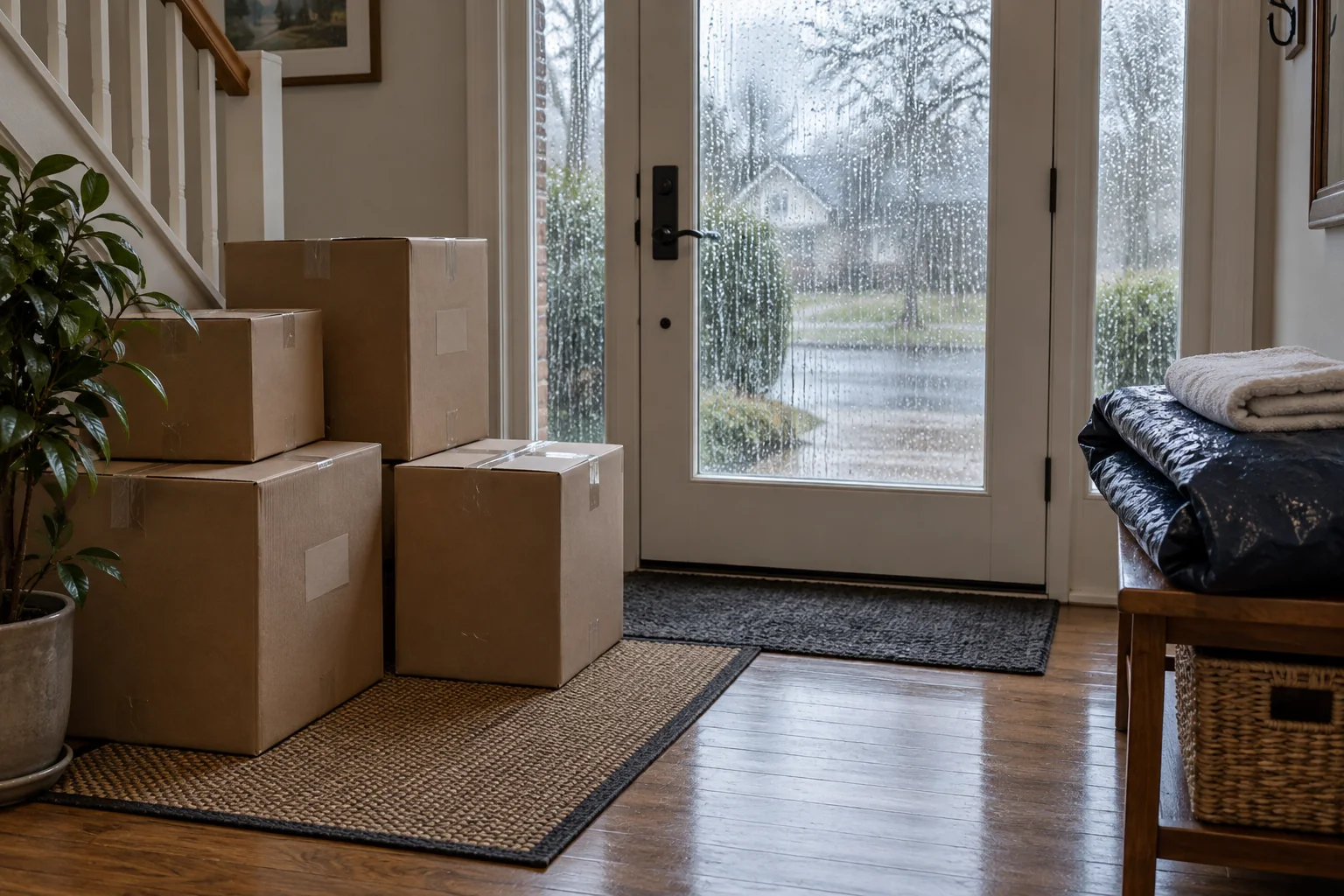
At the old home, choose an indoor area near the exit where boxes can wait without blocking access. At the new home, choose a dry receiving area where cartons can be counted and directed to rooms. Both areas need enough room for the crew to work without stacking items against a door or covering a required path. Ask the building manager about common-area use when applicable.
If the entrance has no cover, shorten the time each item spends outside. The crew should control the loading sequence; the household can make sure boxes are closed, labeled, and ready when called. Do not set a large pile on wet pavement just to appear prepared. Keep small personal bags and records in a separate location that will not be confused with the shipment.
At the destination, put down property-approved floor protection before unloading begins if the building requires it. Check whether the material becomes slippery when wet and follow the provider’s method for keeping it secure. A protective layer should reduce damage without creating a new hazard. Have a place to collect wet covers so they do not spread water through the home.
Protect belongings with a dry handoff plan
Decide where boxes can wait under cover before loading. A pile of cartons left outside in rain can weaken or become difficult to handle. Stage items indoors within building rules, then move them to the vehicle in an orderly sequence directed by the crew.
Ask the mover what protection it provides for furniture and how it handles wet conditions. Use materials suitable for each item, with product care instructions in mind. A cover should protect during transfer without trapping moisture for a prolonged period. Do not wrap a damp object tightly and assume it will dry inside the package.
Keep electronics, papers, textiles, and other moisture-sensitive groups identified so their handling can be planned. That does not mean every item needs a special purchase. It means the crew and household know what cannot sit in an exposed staging area. Follow manufacturer guidance for any device or furniture finish with particular care needs.
At the new home, remove wet outer materials when it is appropriate and inspect belongings. Keep damp covers away from floors and furniture that could be affected. Record any concern promptly using the carrier's procedures if a provider handled the shipment.
Plan the vehicle and route with the provider
The driver or moving company should determine whether its vehicle and route are suitable under current conditions. Give the provider addresses, building access, and any known local closure or weather issue. Do not instruct a driver to take an unsafe shortcut to meet a reservation.
Check official travel advisories and local road notices for the planned route. A road may be closed due to flooding, ice, fallen trees, or emergency work. The National Weather Service warns against driving through flooded roads because the depth and condition underneath may be unknown. Do not cross a barrier or assume a moving truck is exempt.
If the destination route changes, tell the person receiving the shipment and any building manager. A different arrival time may require a new loading dock or elevator slot. Check whether the driver can reach the approved entrance rather than only the street address.
Keep a safe place for household travelers if the truck pauses or arrives late. Their plan may differ from the shipment's plan. Documents, medication, keys, chargers, and overnight supplies should remain accessible to the people who need them.
Coordinate apartment and shared-building rules
Apartment moves may depend on service elevators, loading areas, and scheduled protection. Bad weather can disrupt those resources. Ask management how a reservation is changed and whether a delayed crew may still use the elevator. Do not assume staff can extend the slot when another move follows yours.
Share the updated arrival and departure times with the mover. A crew should know which door to use and what building protection is required even if the original schedule changes. Keep the approved route and any new instructions together.
The guide planning a move out of an apartment building covers reservations, loading areas, and management communication in more detail. Use it to identify dependencies before a storm forces a last-minute call.
After the move, check common areas for wet packaging, dirt, or damage and follow the building's reporting process. A rainy day can make it harder to distinguish preexisting conditions from move-related issues, so accurate before-and-after notes can help.
Keep people comfortable and supervised
Assign a place for children, pets, or anyone who will not be part of the loading work. A porch or vehicle that seemed convenient in mild weather may be unsuitable in heavy rain, cold, or heat. Choose a protected place with a responsible person and access to supplies that fit their needs.
Plan clothing and personal bags for the actual weather. Dry layers, appropriate footwear, water, and other necessities may matter for household travelers. Do not put all spare clothes in the shipment if the household could arrive wet at temporary lodging or the new home.
For a person with limited mobility, verify that the alternate path and waiting place remain usable under the conditions. A cleared route for a dolly may not serve someone using a mobility device. Ask the person what they need and coordinate with the property contact or transport provider as appropriate.
Let the moving crew manage its own work practices and safety requirements. The household can provide accurate information and a clear site, but should not pressure workers to carry a load on a surface they judge unsafe. A pause may be the most practical decision.
Adjust for heat, cold, and wind
Bad weather is not limited to rain. Heat, cold, and strong wind can affect loading, travel, and the first hours in a new home. Check official forecasts and any warnings for the full route. Ask the moving provider whether timing or work methods need to change under its policy.
Keep household travelers' essentials accessible, including water, appropriate clothing, and any items required by their individual care plans. Do not leave a person or pet waiting in an unsuitable vehicle while access problems are resolved. Arrange an indoor or otherwise suitable waiting place before the truck arrives.
Wind can complicate handling of doors, covers, and light loose items. Secure personal papers and packing materials so they do not blow into the route. If conditions make carrying large objects unsafe, stop and let the crew assess. This guide does not prescribe a wind-speed threshold for every object and site.
At the new home, verify that power, heating, cooling, and water arrangements needed for the household are working according to the property and provider instructions. A weather delay combined with a service gap can make the first night harder. Record problems and contact the responsible provider or manager.
Separate weather protection from item care
Rain protection during a short walk to the truck is different from long-term storage protection. A cover that keeps drops off furniture may need to be removed or changed after arrival. Ask the mover how its materials are used and follow the item’s care instructions, especially for surfaces that should not remain covered while damp.
For cartons, inspect condition before loading. A box already wet or weak should be repacked if the contents can be handled safely, rather than simply covered with more tape. A damaged carton can be hard to lift and may not protect what is inside. Keep any repacked box code and inventory entry consistent so it can still be found later.
Do not rely on one kind of material for everything. A document folder, upholstered chair, and kitchen carton have different vulnerabilities. List the few groups that need extra attention, then decide with the provider how they will be moved. This targeted plan is more useful than covering every item indiscriminately and discovering at delivery that labels or handles are hidden.
Handle a delay without losing track of goods
If the truck cannot leave or arrive as scheduled, update the inventory status. Know which items remain in the old home, which are loaded, and which are personally carried. Keep important documents and daily-use items with the household rather than in a vehicle that may be parked elsewhere.
Ask the moving provider where the loaded shipment will be kept during a delay and how the new delivery time will be confirmed. Follow its written terms. Do not assume that goods will remain in the same vehicle or that you can retrieve a box during the pause.
If lodging or key arrangements change, record the new address and contact information. Make sure every traveler knows the current plan. A child pickup, pet care handoff, or accessible transport booking may need its own revision rather than automatically moving with the truck schedule.
Keep a brief log of material changes: time, contact, decision, and next action. You do not need to document every raindrop. The record helps you reconcile the shipment and appointments later if the move spans several days.
Inspect on arrival and close out the weather plan
Before unloading, check that the destination route is open and safe enough for the crew's work. Confirm building access, parking, and any protective materials. If a route remains hazardous, discuss a new time or method with the provider rather than pushing ahead because the truck is already present.
As boxes and furniture enter, keep wet outer materials in a designated place. Check labels and room destinations. If a carton looks damaged or wet, document its condition and follow the carrier's reporting process. Do not discard relevant packaging before recording a concern if it may matter to that process.
Once the household is inside, confirm that first-night supplies and services are available. Dry or replace wet personal items as appropriate to their care instructions. Return borrowed protection materials and clean common areas under building rules.
Bad weather planning works when the household can change course without losing the essentials or confusing the handoffs. Watch official conditions, keep provider contacts and reservations together, assess both loading paths, and allow a safe pause or reschedule when needed. Protecting the schedule should never outrank the people moving through it.