Housing and access
Planning a household move with pets
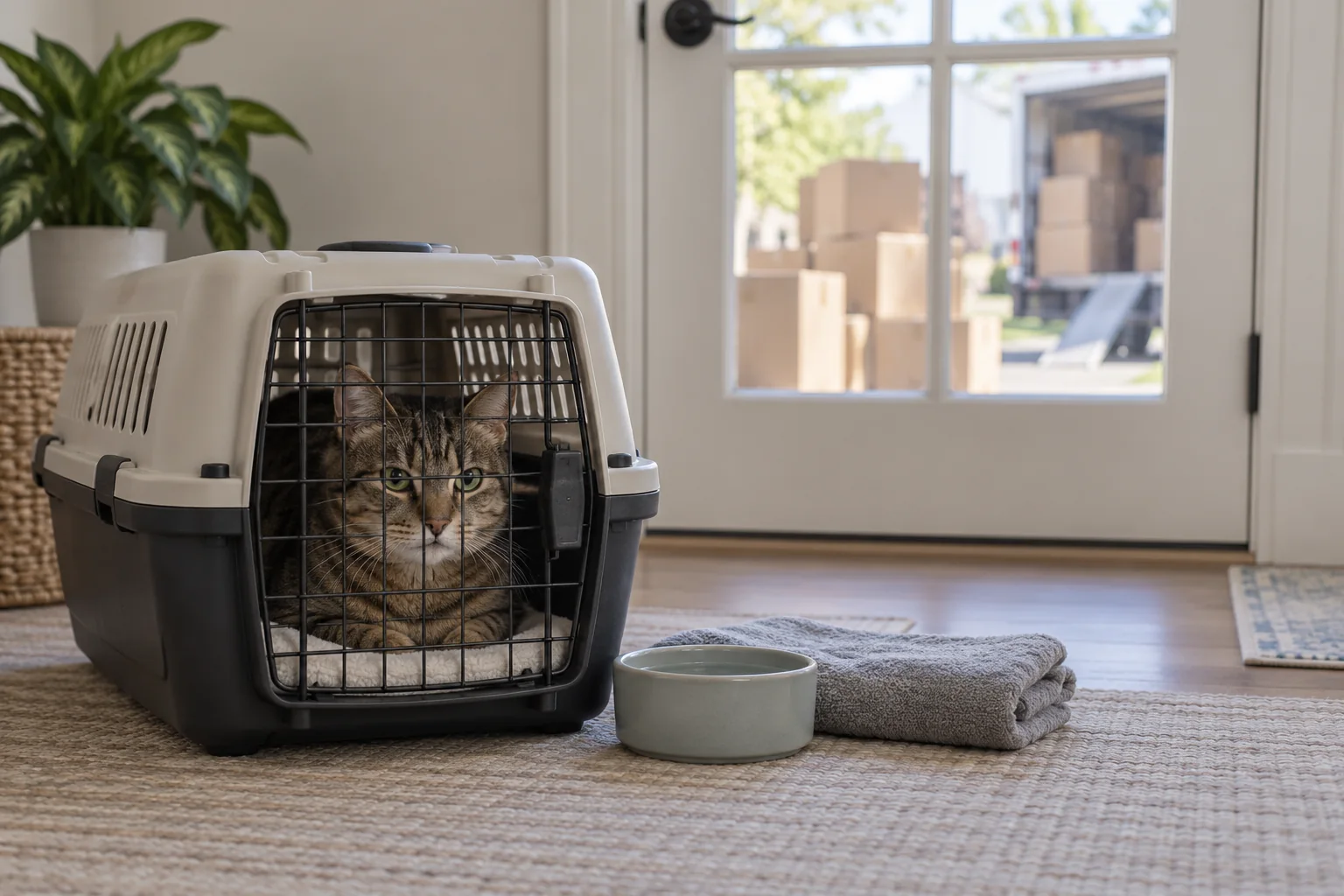
A move with pets needs a separate travel plan. The boxes, truck, and keys are only part of the day; an animal still needs suitable containment, care, and a responsible person while doors open and furniture moves. Start by deciding where each pet will be during packing, loading, travel, unloading, and the first period in the new home.
The right plan depends on species, health, route, and transport method. A dog traveling by car may need a different arrangement from a cat flying or a small animal staying with a caregiver. Do not apply one species' advice to another. Ask your veterinarian about your animal's health and handling needs, check current destination rules, and confirm the policies of any airline, lodging provider, or hired transporter.
This guide focuses on organization. It does not prescribe medical treatment, a carrier type for every animal, or a universal travel schedule. Use it to identify questions early, keep supplies accessible, and assign responsibility at every handoff.
Map the pet's route before the household route
Write a sequence for each animal: current home, any temporary care location, vehicle or flight, overnight stop, and new home. Note who is responsible at each stage. A household may have several adults helping with boxes, but one named person should know where the pet is and what happens next.
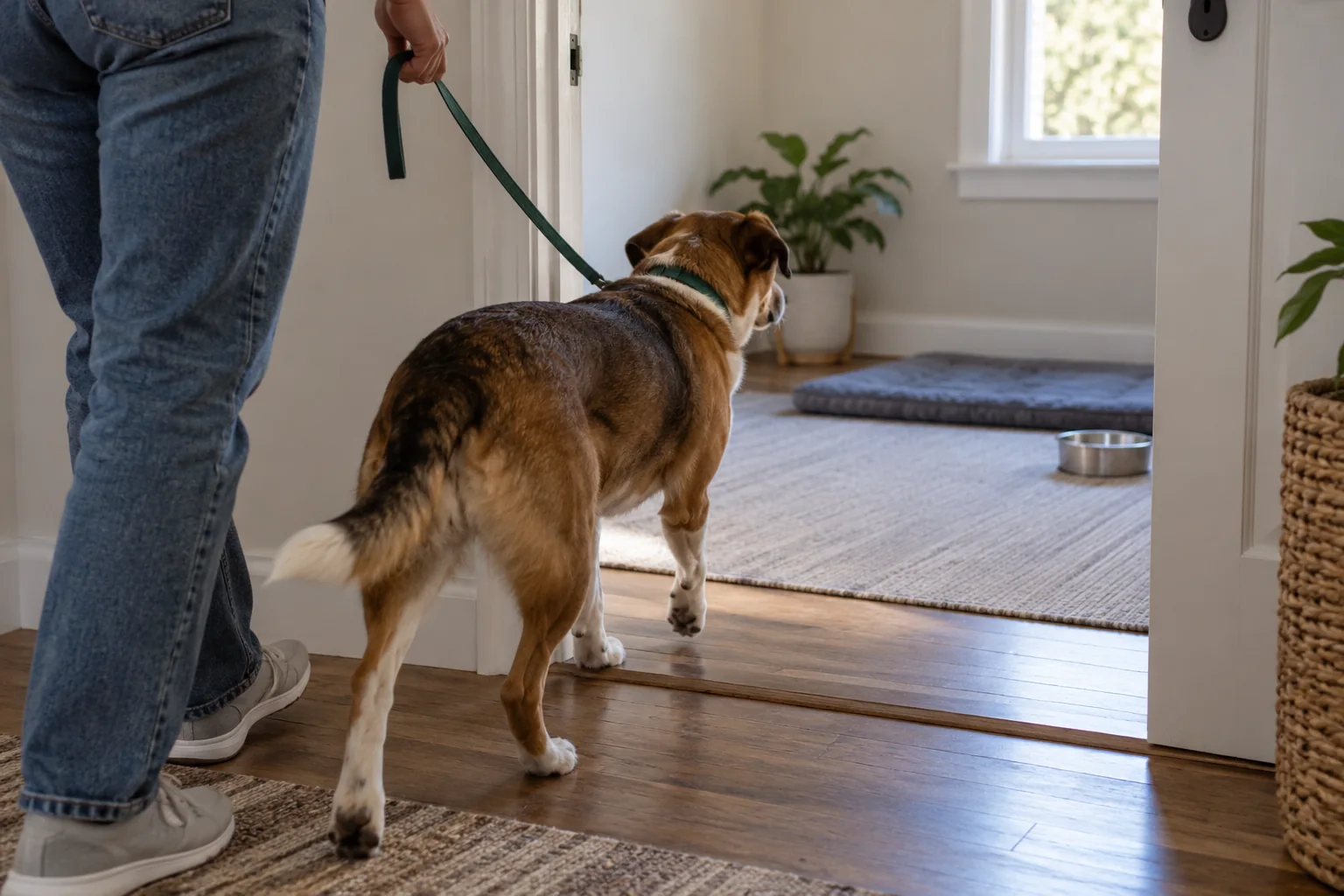
Check whether the pet will remain at home during loading. Repeatedly open doors, moving carts, and unfamiliar workers can make that difficult to supervise. Another suitable location or a separate room outside the moving path may be more workable. Confirm that the room will remain closed and that the crew does not need to enter it.
If a caregiver will take the pet, arrange pickup and return times, supplies, emergency contact information, and any care instructions. Do not assume that a neighbor can keep the animal longer if the truck is delayed. Get an explicit plan for an extended loading window.
Put the pet's route on the main move timeline. A flight or boarding reservation may determine when the household can leave, while the moving truck may depart at a different time. The animal's handoffs should be visible alongside keys, lodging, and transport bookings.
Check destination requirements for the actual species
For a move between US states or territories, USDA APHIS says the receiving state or territory sets animal entry requirements for owner-accompanied pets. Its state-to-state pet travel guide directs owners to the destination's requirements and recommends contacting a veterinarian when travel details are known. Do not assume a rule from the state you are leaving applies at the destination.
Requirements may depend on the species and place. Use the destination authority's current instructions and ask its animal health office if a requirement is unclear. Your veterinarian can help identify what records, examinations, vaccinations, or other steps apply to your pet. Avoid using a generic article to decide whether a particular certificate is required.
A move within one state may still involve local rules for licensing, housing, or animal care. Check the new city, county, property, and service providers that matter to you. A building's pet policy is separate from a government entry rule, and both may affect the plan.
Keep required records accessible to the person traveling with the pet. Do not put the only copy in a box on the moving truck. Protect personal information and the animal's identifying details. Make an appointment early enough for any required process under the actual destination rules.
Do not treat every animal like a dog or cat
The word “pet” covers animals with very different care and travel needs. A bird, rabbit, reptile, fish, or small mammal may need equipment and environmental conditions unlike those for a dog or cat. If your animal is not one of the common species addressed by a general transport policy, ask the carrier explicitly whether it accepts that species and what conditions apply.
Check the animal’s own enclosure and care instructions with a veterinarian experienced with that species or another authoritative source. The ordinary home enclosure may not be suitable for travel, and a travel container may not be suitable for a long temporary stay. Decide where the animal will live at each stop, who will set up that space, and which supplies must be carried separately.
Do not improvise temperature, ventilation, feeding, or water arrangements from advice written for another species. This guide cannot provide a safe universal recipe. Write down the specific instructions you receive and put the responsible person’s name beside each step. If the transport provider cannot accommodate those requirements, choose another arrangement before the household booking is final.
Confirm transport and lodging policies
If you will drive, plan who supervises the animal and where its travel setup will fit in the vehicle. Do not place a pet in a moving truck or cargo area merely because there is space. Ask the transport provider what it permits; commercial household-goods services may not be an appropriate animal travel method.
If you will fly, the US Department of Transportation notes that airline pet policies vary. Review the DOT flying-with-a-pet guidance, then confirm the chosen airline's current rules for the species, carrier, booking, fees, and any paperwork. Do this before buying travel arrangements that depend on pet acceptance.
Check temporary lodging, rental vehicles, boarding providers, and the new property individually. A place that calls itself pet friendly may still limit species, number of animals, or room access. Get the details that apply to your reservation and record them. If a pet cannot stay at the planned stop, you need an alternate route before move day.
If a professional pet transporter will take custody of the animal, ask about its process, records, contacts, handoffs, and emergency plan. Know who has the pet at each stage and how you will receive updates. Keep the animal's transport paperwork separate from the household furniture inventory.
Ask a veterinarian about health-specific concerns
Arrange a conversation with the pet's veterinarian when health, age, travel method, or destination requirements make it appropriate. Ask about the animal's current medications, records, handling needs, and the actual trip. Do not start, stop, or adjust medication based on a moving checklist.
If the pet uses a medication, therapeutic food, or medical device, keep an adequate accessible supply under the veterinarian's and product's instructions. Ask about storage during travel when temperature or timing may matter. Do not put these items into an inaccessible moving carton.
Consider what care will be available along the route and at the destination. Record your current veterinarian's contact information and identify how you would find suitable care if needed after arrival. You do not need to diagnose possible problems in advance to make this information accessible.
For an animal with a particular condition, request individualized advice rather than assuming standard travel tips are sufficient. The logistics plan should implement that advice: who carries the supplies, where the pet rests, and how the household would change course if the original trip is not suitable.
Prepare the travel setup before move day
Use equipment suitable for the species, the animal, and the travel provider's rules. A carrier, crate, restraint, or other arrangement should be selected under relevant veterinary guidance and transport requirements. Check the condition and fit of the actual equipment, including closures and handles, before the trip.
Let the pet encounter the travel setup in a calm, supervised context before departure when the veterinarian or relevant guidance supports that approach. Move day is a poor time to discover that a carrier door will not latch or that the animal cannot be handled as assumed. Make any needed change while there is still time.
Label equipment with appropriate contact information without exposing more private data than needed. Keep a photo and identifying details in a secure place. If the animal is separated from the household, those records can help the responsible people communicate clearly. Follow the current advice of the relevant identification provider about keeping registration details up to date.
Pack a separate pet kit: suitable food, water access, feeding items, waste supplies, care items, records, and any familiar objects that are useful for this animal. The kit should travel with the responsible person, not disappear among general household boxes. Check it against a written list immediately before leaving.
Manage loading day deliberately
Choose a location for the pet while workers move through the home. If it is a room in the home, make sure the door can remain secure and the room has what the animal needs for the period. Tell the moving crew which door must not be opened, but assign a household member to maintain control. Do not make crew members responsible for pet supervision by implication.
If the pet will leave before loading starts, schedule the handoff early enough to avoid a rush at the doorway. Confirm the caregiver has the supplies and contact information. Record the expected return time and a backup method of contact if the move takes longer.
Keep food, water, waste, and necessary care accessible throughout the day according to the animal's needs and veterinary advice. A household may be tempted to pack bowls or supplies because the room looks finished. Check the pet kit before the last general box is sealed.
At the end of loading, verify the animal's location and travel arrangement before the vehicle leaves. Count pets as carefully as keys and personal bags. Do not assume an animal has already been transferred because its supplies are in the car.
Build the road or flight itinerary around the animal
For a road trip, review the route, duration, stops, and expected conditions. Ask your veterinarian how to plan breaks and care for the particular animal. Do not leave the pet unattended in a vehicle while household errands or check-ins take longer than expected. Arrange another adult or a suitable stop when a task requires someone to leave the vehicle.
Have a plan for unexpected delays. Keep the pet kit accessible even if luggage is packed tightly. Identify a way to contact the veterinarian or suitable care service if an issue arises. A delayed move should not leave the pet's food or necessary supplies on a truck that follows a separate schedule.
For air travel, confirm the airline's current check-in time, carrier rules, and animal handling process. Do not rely on an old reservation note if the flight, aircraft, or route changes. Contact the airline promptly after a change to verify that the pet's booking and requirements still apply.
If a move includes a temporary stay between homes, check that the animal is permitted at every stop. A lodging booking for the humans is not a pet booking unless the provider confirms it. Keep that confirmation with the route plan.
Prepare the new home before the pet arrives
Decide where the animal will first be placed at the new property. The area should be separate from unloading traffic and suitable for the species under the guidance you use for that pet. Check doors, windows, screens, and access points before opening a carrier or other containment setup.
Move the basic supplies into that area before the pet arrives: water access, food as appropriate, waste arrangements, bedding or enclosure, and necessary care items. Keep them out of the truck's general load when the animal arrives first. Assign an adult to prepare the space and communicate when it is ready.
If the new home has a yard, balcony, or shared hallway, inspect those spaces before allowing access. Property conditions may differ from what you saw during a brief visit. Follow the animal's usual supervision and containment needs and any housing rules. Do not assume a closed gate or screen is secure without checking it.
Tell the unloading team which area must remain closed or clear. If furniture later needs to enter that area, plan a temporary alternate location for the pet before opening the door. The animal's place should not be changed unexpectedly during a heavy move.
Update local arrangements after arrival
Check licensing, registration, or identification updates required or recommended by the new locality and the providers you use. Requirements vary, so use official local sources and your veterinarian's guidance. Record the date and confirmation of any change.
Find the new veterinarian or service provider you intend to use and learn how records will be transferred under their process. If you already have a care appointment planned, verify the new address and travel time. Keep current medications and instructions available while administrative records catch up.
Update boarding, walking, grooming, or care contacts that will continue after the move. Give them the new address through their secure or official method. If the pet is staying temporarily elsewhere, keep the caregiver informed of the final return plan and any change in timing.
Unpack the pet's ordinary supplies after the household is settled enough to locate them. Check the box inventory rather than opening unrelated cartons. Close the travel kit only when its items have been placed where the responsible person can find them.
Coordinate with other household constraints
A household member with limited mobility may need a specific route, timing, or support arrangement while the pet is handled. The article planning a move when a household member has limited mobility can help you coordinate access and task assignments. Do not make that person responsible for a pet handoff unless the plan works for them.
Apartment buildings may have separate pet and move rules. Check elevators, common areas, loading times, and where the animal may wait. Planning a move out of an apartment building covers the building access work that should be coordinated with the pet's travel plan.
If children are also moving, assign an adult to pet supervision. A child may help with a familiar task under appropriate supervision, but the person responsible for the animal's safety and transport should be clear. Do not let a child's job change unexpectedly because the adults are busy with the truck.
Keep one current itinerary for everyone involved. It should state where each pet is, who has responsibility, and the next handoff. Share only necessary information with movers, caregivers, lodging providers, and veterinarians.
Keep an emergency contact and fallback
Give the person traveling with the animal a current contact list: the veterinarian, the transport provider if any, temporary caregiver, lodging location, and a suitable service at the destination. Save it in a way that remains accessible if a phone loses power or coverage. Do not put the only copy on the household truck.
Think through one realistic change, such as a delayed delivery or lodging cancellation. Identify where the pet and its supplies could safely stay while the adults revise the schedule. Confirm permissions rather than assuming an alternate hotel or caregiver will accept the animal. Record who has authority to make that call and how other household members will be informed.
Check the plan one final time
The day before departure, confirm destination rules, transport bookings, lodging permissions, caregiver arrangements, and the pet kit. Make sure records and required supplies are with the person traveling with the animal. Check that the new-home arrival space can be prepared before the pet enters.
On move day, note each handoff as it occurs. If the schedule changes, tell the next responsible person directly and update the itinerary. The most dangerous logistics error is an assumption that someone else has already taken the animal or its supplies.
After arrival, verify that all animals are accounted for, have access to their necessary care, and are in an appropriate area away from unloading. Then continue with the household move. The pet plan works when its requirements are checked from authoritative sources and its responsibilities remain clear through every door, vehicle, and stop.